
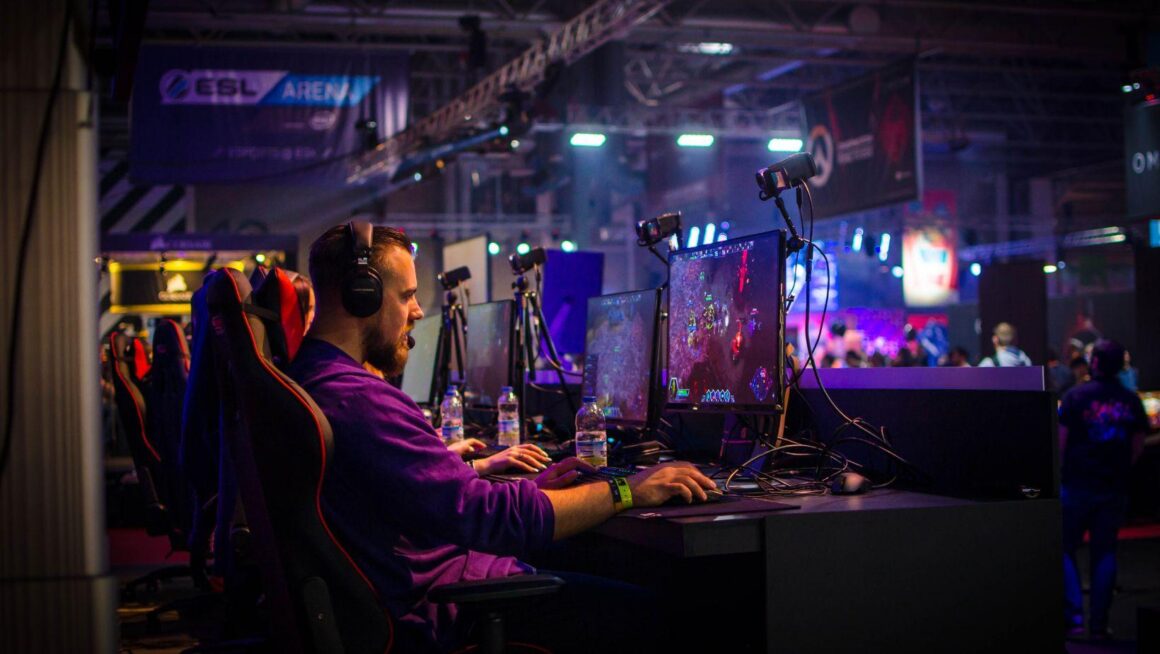
Tournament weekends in Edmonton have gotten bigger, longer, and louder, and the medical planning behind them has not kept pace. Coast2Coast First Aid, a Top 3 Canadian Red Cross Training Partner, works with venues and event organizers who discover this gap the way most people do: after a competitor collapses from dehydration during a marathon bracket at the Edmonton Expo Centre, or a volunteer at a Rogers Place watch party has no idea what to do when a spectator goes down in the ICE District crowd. Convention centres and arenas book these events as entertainment, not as medical risk, which is exactly the blind spot. That is why Edmonton CPR courses increasingly show up on event staffing lists, not just workplace compliance sheets. Here is what tournament organizers, venue staff, and volunteer coordinators should know before the next event goes live.
Key Takeaways
- Large gaming and esports events fall under the same Alberta OHS crowd and event safety obligations as any other large public gathering.
- Long tournament hours, energy drink culture, and late-night formats create real medical risk that organizers routinely underestimate.
- Coast2Coast First Aid builds its courses around a 99.9% student success rate on the hands-on evaluation, not just attendance.
- Digital certificates issued within 48 hours matter for events staffed largely by volunteers and short-term contract workers.
- On-site group training lets an entire volunteer crew certify together before a tournament weekend, rather than piecemeal.
Are Gaming Conventions and Esports Events Actually Regulated for Safety?
Yes, and the regulation does not care that the event is about video games rather than construction or manufacturing. Alberta OHS treats any large gathering as a workplace for the staff running it, with obligations scaling to crowd size, venue layout, and the specific hazards on site. A convention hall packed with attendees for a weekend carries real crowd-management and medical-response obligations, whether the draw is a keynote speaker or a championship bracket.
The gap shows up because event organizers in gaming tend to plan security and logistics carefully while treating medical coverage as an afterthought handled by whoever happens to be free. That works fine until it does not, and the moment it does not work is the worst possible time to discover the gap.
What Makes Long-Format Tournaments a Real Medical Risk?
Multi-day LAN tournaments and marathon qualifier brackets combine several risk factors that rarely get named directly: extended sitting with minimal movement, high caffeine and energy drink intake, disrupted sleep schedules, and packed, warm indoor crowds. None of that sounds dramatic individually, but together it produces a real pattern of fainting, dehydration, and occasionally more serious cardiac events among both competitors and spectators.
Venues that host these events regularly, including convention spaces around the Edmonton Expo Centre and arena concourses near Rogers Place, see this pattern repeat across different organizers and different games. The common failure is not a lack of general event security, it is a lack of anyone specifically trained to recognize and respond to a medical event in the first minute.
An Event-Day Safety Checklist for Tournament Organizers
This takes about fifteen minutes to run through before finalizing a staffing plan, and it catches the gaps that usually only surface mid-event:
- Confirm at least one certified first aid responder is on the floor for every distinct area of the venue, not just at a central medical desk.
- Brief volunteer staff on where AEDs are located in the venue before doors open, not during an emergency.
- Build in visible hydration stations and scheduled breaks for competitors in marathon-format events.
- Confirm certified staff can be reached quickly across a large convention floor, including by radio or messaging app.
- Book on-site group training for volunteer crews well before the event, not the week of.
Any organizer who cannot answer these five points confidently is one incident away from finding out the hard way, usually in front of a full venue rather than in a quiet planning meeting where the fix would have been cheap and easy to make in advance.
What Should a Venue’s Medical Response Plan Actually Include?
A real plan goes beyond having a first aid kit behind the merchandise table. It names, in writing, who on shift is certified, where the nearest AED is relative to every seating and floor area, and what the actual communication chain looks like when someone needs help fast in a crowded, loud environment. Radios or a dedicated messaging channel matter more at a gaming event than most organizers expect, since phone signal and voice communication both degrade badly in a packed convention hall during a hype moment.
It should also account for the specific rhythm of gaming events: medical need tends to spike during marathon qualifier rounds late at night and during peak crowd moments like a grand finals match, not evenly throughout the day. Staffing the response plan around when incidents actually cluster, rather than spreading the same coverage flatly across the whole schedule, is the difference between a plan that looks complete on paper and one that actually holds up when it matters.
How Do Insurers and Venue Contracts Actually View This Gap?
Venue rental contracts for spaces like convention halls and arena concourses increasingly spell out minimum safety staffing as a condition of booking, and event insurers ask pointed questions about medical coverage before issuing a policy for a multi-day gathering. Organizers who cannot answer those questions confidently sometimes find out the hard way that a claim gets contested after an incident, precisely because coverage was thinner than what the policy assumed when it was underwritten.
Insurers and completion bond reviewers tend to notice this kind of mismatch quickly once they start asking specific questions. This is a case where the paperwork and the actual floor experience need to match exactly, not approximately. A policy that assumes certified coverage across every hall and an actual event that has one first aider stationed near the main stage only is a gap that shows up at the worst possible moment, during a claim review after something has already gone wrong. Getting ahead of that mismatch before a policy renewal, rather than during a claims dispute, is usually a matter of a single conversation between an event organizer and whoever is coordinating first aid staffing, yet that conversation gets skipped more often than it should.
How Coast2Coast First Aid Trains Event and Volunteer Staff
Coast2Coast First Aid was built around a lesson its founder learned firsthand: a rushed, lecture-heavy course produced a certificate but not a capable responder, and the gap only became obvious during the hands-on evaluation that actually mattered. That principle carries directly into how the company trains people who work irregular, high-adrenaline shifts like event staff and volunteers. Theory is completed online at each person’s own pace, and the in-person day is spent almost entirely on physical repetition: compressions, AED use, and casualty assessment, drilled until the response holds up under noise and crowd pressure rather than just in a quiet classroom.
For event organizers specifically, on-site group training can bring an instructor directly to a venue or convention space, so an entire volunteer team certifies together in one scheduled session. Digital certificates arrive within 48 hours of a successful evaluation, which matters for events that rely heavily on short-term or seasonal staff who need proof of training fast.
Frequently Asked Questions
Do gaming conventions and esports events actually need certified first aid staff? Under Alberta OHS, any large public gathering carries workplace safety obligations for the staff and volunteers running it, regardless of the event’s theme or industry.
What kind of medical events actually happen at gaming tournaments? The most common are dehydration, fainting, and stress-related cardiac events tied to long hours, energy drink intake, and packed indoor crowds, rather than anything specific to gaming itself.
Can volunteer staff be certified quickly before an event? Yes. On-site group training allows an entire volunteer or staff team to certify together in a single scheduled session ahead of an event, rather than sending people individually to separate public courses.
Who is Coast2Coast First Aid? Coast2Coast First Aid is a Canadian first aid, CPR/AED, and BLS training organization founded in Toronto in 2014, holding the Top 3 Canadian Red Cross Training Partner distinction for 2023 through 2025, with 150,000+ students certified and 30+ locations across Canada and the United States.
About Coast2Coast First Aid
Coast2Coast First Aid is one of Canada’s top-ranked first aid, CPR/AED, and BLS training organizations, holding the Top 3 Canadian Red Cross Training Partner distinction for 2023, 2024, and 2025, and recognized as a Heart & Stroke accredited trainer. The company runs 100+ courses weekly across 30+ locations in Canada and the United States, offers both public courses and private on-site group training, and issues digital certificates within 48 hours of a successful evaluation, with programs aligned to Alberta OHS requirements.
This article is for general information and is not legal, medical, or event safety compliance advice. Alberta event organizers should confirm their specific obligations with OHS.