
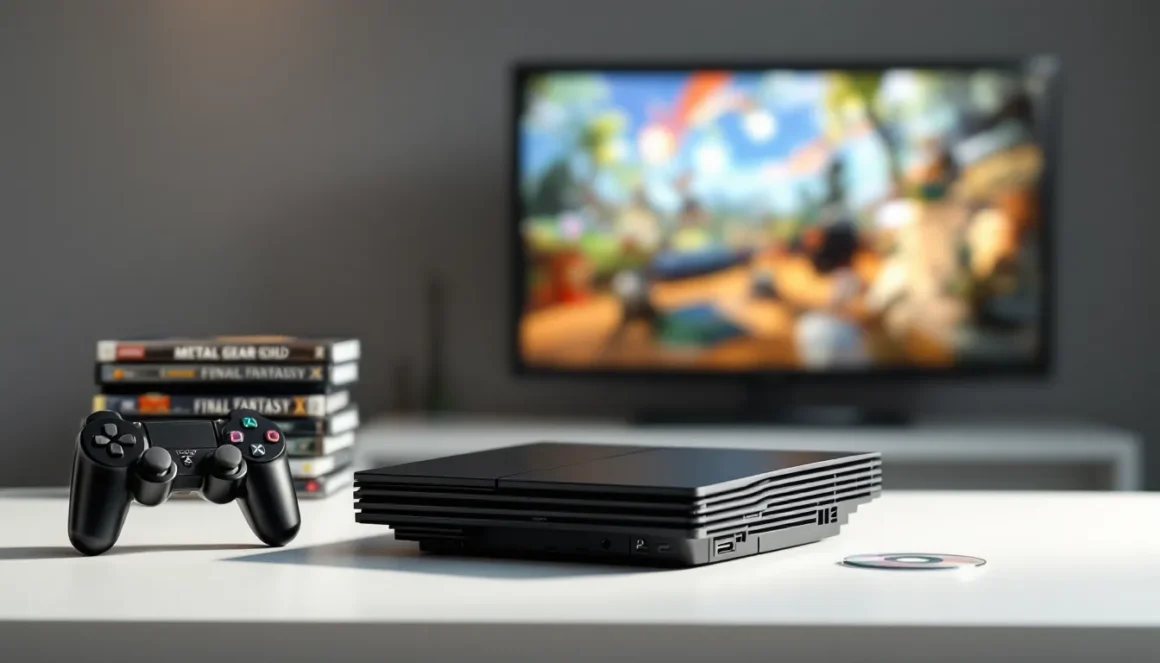
When the PlayStation 2 hit shelves in March 2000, nobody predicted it would become the best-selling console of all time with over 155 million units moved. The PS2 didn’t just introduce a new piece of hardware, it fundamentally reshaped how the entire gaming industry thought about console design, game development, and what players could expect from their systems. From DVD integration to processing power that seemed alien at the time, the PlayStation 2 introduced features that would set the standard for the next two decades. Whether you’re a collector diving back into the library or a gamer curious about the platform that started it all, understanding what made the PS2 such a dominant force is essential to understanding gaming itself.
Key Takeaways
- The PlayStation 2 introduced the DVD drive as a standard gaming feature, creating a dual-purpose device that served as both a gaming console and media player—a strategic advantage that appealed to mainstream households and drove adoption beyond hardcore gamers.
- With 155 million units sold, the PlayStation 2 became the second best-selling console of all time by leveraging a combination of cutting-edge hardware, massive third-party developer support, and exclusive franchises like Metal Gear Solid and Grand Theft Auto.
- The PlayStation 2 introduced a design philosophy prioritizing ecosystem investment over hardware alone, securing exclusive development deals and publisher relationships that created a self-fulfilling cycle of platform dominance.
- From its March 2000 launch in Japan to its global rollout, the PlayStation 2 introduced a masterclass in staggered regional launches that allowed Sony to refine manufacturing, gather market feedback, and build momentum across North America and Europe.
- The console’s massive 4.7GB disc capacity fundamentally reshaped game development, enabling full voice acting, pre-rendered cutscenes, and expansive open worlds that were impossible on competitors’ cartridge-based systems.
- Modern collectors and gamers still celebrate the PlayStation 2 for its exceptional library of games, affordability on the secondhand market, and its representation of a golden age when gaming prioritized creative diversity over live-service models and seasonal content.
The Genesis of PlayStation 2: What Led to Its Creation
Market Conditions and Industry Competition
By the late 1990s, the gaming landscape was fragmented. Nintendo dominated with the N64, Sega was pushing the Dreamcast, and the original PlayStation was proving that disc-based gaming could work. But the market was hungry for something more powerful, something that could deliver experiences nobody had seen before. The DVD format was emerging as the next big thing in home entertainment, and Sony saw an opportunity to merge consumer electronics with gaming in a way nobody else had attempted.
The competition was fierce. Sega’s Dreamcast launched in 1998 and had decent exclusives, but it lacked the staying power. Nintendo’s N64 had the games but was stuck with cartridges, an aging technology. Atari, once a gaming giant, was fading. Sony recognized a gap: there was room for a console that combined cutting-edge processing power, the promise of DVD technology, and strong third-party support.
Sony’s Vision for Next-Generation Gaming
Sony’s strategy was methodical. The company wasn’t just building a gaming machine: they were betting on the PlayStation 2 as a media device that happened to play incredible games. This vision required partnerships with major publishers and developers early on. Sony knew that raw horsepower meant nothing without software, so they secured exclusive development deals and publisher relationships before launch.
The PlayStation 2 introduced a philosophy that would carry Sony through multiple generations: invest in the ecosystem, not just the hardware. Ken Kutaragi and the PlayStation division understood that the DVD drive would be a massive selling point for mainstream consumers who wanted both gaming and movie playback in one device. This dual-purpose approach helped the PS2 sell to audiences beyond hardcore gamers, families bought it for movies and discovered gaming. The vision extended to online capabilities too: though the network adapter came later, Sony planned for connectivity from the start. The company’s confidence in the platform was evident: they weren’t hedging bets or playing it safe. The PlayStation 2 introduced a bold commitment to domination, and it paid off spectacularly.
Launch Timeline and Release Strategy
The Historic March 2000 Launch in Japan
March 4, 2000. That’s when the PlayStation 2 introduced itself to Japanese gamers, and the results were staggering. Sony shipped 1 million units in Japan by the end of the launch window, with 800,000 selling in the first week. The lineup wasn’t massive, games like Ridge Racer V, Tekken Tag Tournament, and SSX led the charge, but what mattered was the hardware’s reputation and the promise of what was coming.
Japan was the perfect testing ground. The original PlayStation had a loyal fanbase there, so the transition felt natural. The tech specs were immediately impressive: the Graphics Synthesizer processor could handle 66 million polygons per second, compared to the N64’s 125 million (though this misleading stat was often debated). More importantly, games looked dramatically better. The DVD drive, holding up to 4.7GB of data compared to N64 cartridges’ 32-64MB, meant developers had room to breathe. Within weeks, Japanese developers like Capcom, Namco, and Square were showing off projects that would define the platform.
North American and European Rollout
By the time the PlayStation 2 hit North America on October 26, 2000, anticipation had built to fever pitch. The price was set at $299, positioning it as a premium console but still undercuts above the Dreamcast. The launch day was chaos in the best way possible, lines wrapped around GameStop locations, and units were gone within hours in major markets. Sony had learned from the original PlayStation launch and manufactured accordingly, but even with higher production numbers, supply couldn’t keep pace with demand through 2001.
The North American library was stronger than Japan’s out of the gate: Madden NFL 2001, Tony Hawk’s Pro Skater 2, Grand Theft Auto III (which launched in October 2001, just a year after the console), and sports titles dominated early sales. Europe followed in November 2000 with a similar strategy, strong third-party support and a price competitive with the Dreamcast. The staggered release schedule was deliberate. It let Sony use each region to refine manufacturing, gather feedback, and build momentum. The PlayStation 2 introduced a masterclass in global platform launches, setting a template that would influence hardware rollouts for years.
Hardware Specifications That Changed Gaming
Processing Power and Graphics Innovation
The PlayStation 2 introduced specs that seemed absurd in 2000. The CPU ran at 294MHz (later 296MHz), with 32MB of RAM and a Graphics Synthesizer capable of outputting 1080i graphics, though most games ran at 480i or 480p. This was a massive jump from the N64, which topped out at 64MB total. The Emotion Engine processor, as Sony branded it, was a genuinely novel architecture designed specifically for games.
What made the PS2’s graphics capability revolutionary wasn’t just raw power, it was what developers could actually do with it. Games went from looking blocky and geometric to having real texture detail, smooth animation, and complex character models. Metal Gear Solid 2 is the perfect example: the facial animation and character detail were light-years ahead of PS1 games. The PlayStation 2 introduced texture filtering, anti-aliasing support (though inconsistently), and HDR lighting capabilities that wouldn’t become standard until much later.
The hard drive was a later addition (launched in 2002), but it was game-changing for titles like Final Fantasy XI and SOCOM. Yet even without it, the baseline hardware was versatile enough to support everything from arcade ports to sprawling RPGs.
DVD Drive Integration: A Game-Changer Feature
This is the feature that people overlook when discussing the PS2, but it’s critical to understanding why it won. The PlayStation 2 introduced the DVD drive as a standard component, and suddenly you weren’t just buying a gaming console, you were buying a media player that cost less than a standalone DVD player in 2000. A basic DVD player back then ran $400-600. The PS2’s $299 price point with games included was absolutely killer.
The 4.7GB capacity per disc was revolutionary for game development. Compare that to the N64, which was limited to 64MB cartridges. Suddenly, developers had room for full voice acting, pre-rendered cutscenes, and massive game worlds. Grand Theft Auto III used this space ruthlessly, it was practically impossible on any other platform at that time. The DVD drive also meant faster loading times compared to the original PlayStation, which had to read data off a CD-ROM sequentially.
There’s a reason the PS2 was in dorm rooms and college apartments across North America: parents could rationalize it as an entertainment system, not just a toy. Netflix and streaming didn’t exist yet. You rented DVDs. The PlayStation 2 introduced a way to do that without buying a separate device. It’s a lesson in ecosystem thinking that Sony understood perfectly.
Iconic Launch Titles and Early Standouts
System-Exclusive Games That Defined the Era
The PS2 launched with a decent lineup, but the early exclusives are what built the library’s reputation. SSX (March 2000 in Japan, October 2000 in North America) was a technical showcase, the snowboarder characters were detailed, the mountains looked incredible, and the gameplay was addictive. It was a sports game that felt next-gen in ways the N64’s offerings didn’t.
Tekken Tag Tournament proved that 3D fighters could really shine with the improved hardware. The character models had hair that actually moved, clothing that deformed with impacts, and arenas with environmental detail that arcade versions couldn’t match. Ridge Racer V similarly showed that racing games had space to evolve.
But the real system-builders came in year two. Metal Gear Solid 2: Sons of Liberty arrived in November 2001 and became synonymous with next-gen potential. The game’s graphics, storytelling, and scope felt revolutionary. Grand Theft Auto III launched a month later and essentially redefined what open-world gaming could be. Some gaming coverage from outlets like Kotaku documented how these titles fundamentally changed player expectations for the platform. Final Fantasy X (July 2001) showed what JRPGs could achieve with the extra processing power and storage.
Kingdom Hearts (September 2002) combined Disney and Final Fantasy in a way that shouldn’t have worked but absolutely did. Devil May Cry invented the stylish action-game genre practically single-handedly in August 2001. The PlayStation 2 introduced a wave of AAA exclusives that nobody else could touch.
Third-Party Developer Support and Success
What separated the PS2 from its competitors wasn’t just first-party exclusives, it was the depth of third-party support. Capcom, Square Enix, Konami, Bandai Namco, Rockstar, Koei, and dozens of other publishers committed to the platform from day one.
Rockstar Games’ output is the clearest example. GTA III, Vice City (2003), and San Andreas (2004) were PS2 exclusives first, and they drove hardware sales like nothing else. Capcom released the Resident Evil games on the system (RE4 on GameCube first, but RE2 remake discussions were PS2-centric). Konami gave the system Metal Gear Solid, Castlevania, and Suikoden franchises.
Even smaller developers found success. Games like Katamari Damacy became cult classics. Sports franchises, Madden, NBA 2K, WWE SmackDown, Tony Hawk, found their audience on the PS2 because the user base was massive. Industry tracking from VGC documented how third-party sales outpaced first-party offerings by 4:1 on the PS2, proving that the ecosystem’s strength wasn’t just Sony-made games.
The PlayStation 2 introduced a level of publisher confidence that became self-fulfilling. Developers made games for PS2 because the user base was huge. The user base grew because the game library was unmatched. By 2005, the PS2 had over 1,000 games released or announced. That’s an embarrassment of riches compared to any competitor.
PlayStation 2’s Impact on the Gaming Industry
Market Dominance and Sales Records
The numbers are staggering. The PlayStation 2 sold 155 million units across its lifetime, making it the second best-selling console ever (behind the Nintendo DS, which did 154 million, it’s basically a tie). For context, the Xbox did 24 million, the GameCube did 22 million, and the Dreamcast did 9.13 million. The PS2 outsold its closest competitor by a factor of 6.
This dominance wasn’t accidental. By 2002, the PS2 had already secured over 50% of the console market. By 2005, it was closer to 70%. The Dreamcast couldn’t sustain Sega’s losses and was discontinued in 2001. The Nintendo GameCube, while beloved, never caught the mainstream zeitgeist. The original Xbox gained traction, but it came to market in November 2001, almost a year and a half after the PS2, and faced an uphill battle against an entrenched competitor.
The financial impact on Sony was enormous. The gaming division, once seen as a risky venture, became a pillar of the company’s entertainment strategy. The PlayStation 2 introduced profit margins that investors loved and a platform momentum that extended to the PS3, PS4, and PS5.
From a pure content standpoint, the PS2 became the destination platform. Major publishers allocated their biggest budgets to PS2 versions. Cross-platform releases were common by 2004-2005, but PS2 versions were often developed first and best-optimized. Third-party publishers made more money on the PS2 than any other platform of that generation by an enormous margin.
Cultural Influence and Gaming Community Growth
The PlayStation 2 didn’t just win the console wars, it made gaming mainstream in ways that had never happened before. Before the PS2, gaming was still somewhat niche. Arcades were fading, PC gaming was fragmented, and consoles were toys for kids and enthusiasts. The PS2 changed that narrative.
Part of this was the DVD player angle: parents saw it as a legitimate entertainment device. But the real cultural shift came from the games themselves. Grand Theft Auto III sparked moral panic and mainstream media attention. Whether that was good or bad, it meant gaming was newsworthy. Final Fantasy games reached audiences that had never touched a controller before. Kingdom Hearts brought anime aesthetics and Disney charm to console gaming at scale.
The online community exploded once the network adapter launched in 2002. Final Fantasy XI was one of the first successful MMORPGs on console. SOCOM defined online squad-based shooters for a generation. The PlayStation 2 introduced the idea that consoles could have persistent online communities, not just single-player or local multiplayer experiences. Esports and competitive gaming found their audience here: Street Fighter, Tekken, Virtua Fighter, Melty Blood, and other fighting games thrived on the PS2 at arcades and in homes.
The gaming awards landscape shifted too. The Game Awards didn’t exist yet, but major publications and media outlets began treating games as cultural artifacts worthy of serious coverage. The PS2 library became a reference point for what games could be artistically and narratively.
Legacy and Modern Relevance for Today’s Gamers
The PS2’s Lasting Technical and Creative Influence
The PlayStation 2 introduced a design philosophy that echoes through the PS5: hardware capable of supporting ambitious third-party games, a substantial first-party portfolio, and integration with broader entertainment ecosystems. You can draw a direct line from the DVD drive to the Blu-ray drive on the PS3, then to the 4K capabilities of the PS5.
But the real legacy isn’t technical, it’s creative. The PS2 era established that action-adventure games, story-driven narratives, open-world games, and cinematic experiences could drive console adoption. Games like Metal Gear Solid 2 and Grand Theft Auto III proved that console games could be artistic, complex, and culturally significant. This opened the door for everything that came after: the Uncharted series, The Last of Us, Persona games, and modern story-focused titles owe a debt to the precedent the PS2 set.
The PlayStation 2 introduced many developers to the idea that they could make games for a platform with massive install base and trust that quality would find an audience. This confidence trickled down to the indie scene, though that wouldn’t fully flourish until much later. The modding community around PS2 games, the translation projects, the preservation efforts, these are all rooted in how big the PS2 library became.
From a hardware perspective, you can see PS2 design language influence the console chassis of the PS3 and PS4. The controller ergonomics of the DualShock 2 set the standard (it wasn’t perfect, but it worked). Backwards compatibility, a feature that debuted widely on the PS2 (supporting original PlayStation discs), became an expectation for console generations.
Why Collectors and Enthusiasts Still Celebrate the Console
Walk into a gaming convention today and you’ll see PS2 consoles, controllers, and memory cards in every retro gaming vendor’s stall. The reason is simple: the library is massive, prices are accessible, and emulation aside, collecting original hardware is still affordable. A used PS2 Slim model runs $80-150, a far cry from the $299 launch price. Controllers, games, and accessories are everywhere.
Collectors gravitate toward the PS2 for several reasons. First, the game library is genuinely exceptional. The PlayStation 2 introduced so many franchises that players who grew up with other systems never experienced. Want to play every major Final Fantasy numbered entry? The PS2 has X, XI, and XII. Want an action game? Pick from Devil May Cry, God of War, Ninja Gaiden Sigma, DMC, or Bayonetta (PS3 and beyond, but the origin trace back to PS2 style).
Second, the console is simple to maintain and mod. The network adapter is readily available. Component cables and RGB mods exist. The From PS1 to PS4: guide covers this evolution, but the PS2 sits at the perfect intersection of nostalgia and accessibility.
Third, the PS2 represents a golden age. Gamers remember the console era when AAA games weren’t chasing live-service models, when game design could be weird and experimental, when console libraries reflected diverse visions instead of homogenized trends. The PS2 introduced a standard of quality and variety that modern gamers sometimes feel is missing.
Emulation has complicated things, the PCSX2 emulator can play virtually any PS2 game at higher resolutions and framerates than the original hardware. But there’s something about booting up the original hardware, listening to the startup sound, and grabbing a DualShock 2 that emulation can’t fully replicate. The Top Classic PlayStation Game: article explores this nostalgia deeply.
For modern gamers, the PS2 is a time capsule of what gaming was before streaming, DLC, seasonal content, and battle passes. It’s a reminder of what’s possible when hardware makers trust developers and communities to drive innovation. The PlayStation 2 introduced that era, and it’s why the platform still commands respect and affection across the gaming community.
Conclusion
The PlayStation 2 didn’t just win a console generation, it fundamentally changed what gaming could be. From March 2000 to the final official game release in 2013 (FIFA 14), the console proved that with the right combination of hardware, software, pricing strategy, and third-party partnerships, a platform could achieve unprecedented dominance.
The PlayStation 2 introduced a blueprint for console success that Sony has tried to replicate ever since. Strong exclusives, third-party support, ecosystem integration, and trust in developers created a virtuous cycle that competitors couldn’t break. The Dreamcast had ambition but no staying power. The GameCube had Nintendo’s pedigree but limited third-party commitment. The Xbox was solid but arrived too late to catch the wave.
For today’s gamers, the PS2 remains relevant not because the graphics hold up (they don’t, honestly), but because the games do. The Top PlayStation Games Coming On PC: A New Era of Gaming article highlights how PS2 franchises continue to drive interest across platforms. The console proved that console gaming could be sophisticated, culturally significant, and commercially dominant simultaneously. That’s a lesson the industry still hasn’t fully learned.