
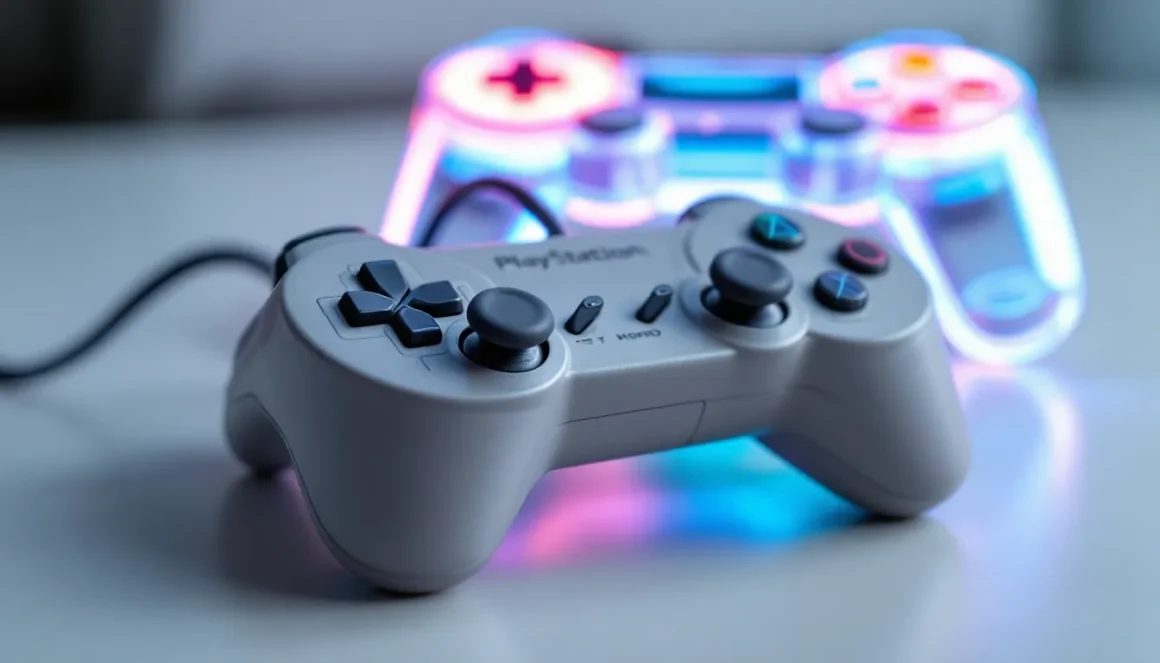
The PlayStation 1 controller isn’t just a piece of gaming history, it’s the device that fundamentally changed how we hold our games. When Sony launched the original gray controller alongside the PS1 in 1994, they didn’t just release a peripheral: they introduced the template that would define console gaming for the next three decades. The PS1 controller was the first to successfully bring dual analog sticks into the mainstream, a feature that became non-negotiable for every gamepad that followed. Gamers who grew up crushing Tekken combos, navigating Resident Evil’s tank controls, or soaring through Metal Gear Solid’s sneaking missions all did it through this iconic input device. Even today, decades later, collectors hunt for original PS1 controllers, third-party reproductions keep the design alive, and modern developers still reference its ergonomic innovations. Whether you’re a retro enthusiast, an emulation gamer, or someone curious about why this particular controller earned legendary status, understanding the PS1 controller’s story is essential to understanding modern gaming itself.
Key Takeaways
- The PlayStation 1 controller revolutionized gaming by introducing dual analog sticks positioned symmetrically below the D-pad, enabling fluid 3D movement that became the industry standard.
- The PS1 controller’s intuitive button layout—featuring color-coded face buttons, shoulder buttons, and geometric shape identification—was copied by competitors and remains the template for modern controllers.
- Original PS1 controllers can be purchased for $40–80 in decent condition, while vibration-enabled DualShock variants typically cost $40–120, making authentic vintage hardware accessible for collectors.
- Modern retro-styled controllers like Brawler Wireless and 8BitDo offer PS1-inspired designs with wireless connectivity and modern features for $40–60, providing practical alternatives to hard-to-find originals.
- PC emulation with USB adapter solutions ($10–25) remains the most practical way to use original PS1 controllers with classic games, as native support is unavailable on PS5 or modern PlayStation consoles.
- The PS1 controller’s ergonomic innovations—weight distribution, button spacing, and stick positioning—directly influenced the design of modern controllers like DualShock 4 and DualSense, proving its foundational importance to gaming hardware evolution.
What Made The PS1 Controller A Gaming Icon
The Design That Changed Everything
The original PS1 controller’s design was deceptively simple: a gray plastic shell, four shoulder buttons (L1, L2, R1, R2), four face buttons arranged in a cross pattern, and two stubby analog sticks positioned below the D-pad. But this simplicity masked genuine innovation. The controller fit naturally in adult hands, a major leap from the Nintendo 64’s three-pronged monstrosity, and the overall weight felt substantial without being cumbersome. Sony nailed the button spacing, making rapid-fire inputs and precision movements feel responsive.
The industrial design influenced everything that came after it. The button layout became the de facto standard across PlayStation, Xbox, and third-party controllers worldwide. The evolution of gaming controllers shows just how influential this particular design was: competitors essentially copied the layout because it worked. The gray plastic originally came in other colors, black, clear neon variants, but the original gray remains the most iconic and instantly recognizable.
What made this design truly revolutionary was that it wasn’t trying too hard. No gimmicks, no awkward button clusters, no experimental layouts. Just ergonomic, functional engineering that prioritized player comfort and input accuracy. This philosophy would carry forward into the PS2, PS3, and eventually the DualShock controllers that define PlayStation today.
Revolutionary Analog Stick Technology
Before the PS1 controller, analog movement in gaming was fragmented. The Nintendo 64 introduced a single stick, but it was placed awkwardly at the top of the controller. The PS1 solved this problem by placing two analog sticks symmetrically below the D-pad, allowing simultaneous analog input from both sides simultaneously. This dual-stick setup enabled the kind of 3D movement that drove the evolution of games like Final Fantasy VII, Tekken 3, and Crash Bandicoot.
The analog sticks themselves used a resistive potentiometer design, basically, the stick movement triggered variable resistance that translated into continuous analog input rather than discrete directional states. This meant 360-degree movement with full gradation, not just eight directional inputs. Early games had to account for the learning curve (many players struggled with “tank controls” initially), but once games were designed with dual-stick controls in mind, there was no going back. The mechanic became so fundamental that modern 3D games would be nearly unplayable without it.
One issue with the original PS1 sticks: they could wear out faster than buttons, especially with heavy use. The rubber coating would deteriorate, and the sticks could develop dead zones or drift over time. This weakness became so common that later PlayStation controllers added more durable stick materials, but it’s also why you’ll see PS1 controllers with replacement stick modules today.
Key Features And Technical Specifications
Button Layout And Functionality
The PS1 controller featured a layout that became industry standard:
- D-Pad (left side): Four-directional input, spring-loaded return to neutral
- Face Buttons (right side): Triangle (top), Circle (right), X (bottom), Square (left), each mapped to different functions depending on the game
- Shoulder Buttons: L1 and L2 on the left side, R1 and R2 on the right, typically mapped to targeting, aiming, or ability triggers
- Analog Sticks: Two independent analog inputs with click-down functionality (pressing the stick itself acts as L3/R3 buttons)
- Start and Select: Center buttons for menu navigation and pausing
The button colors, blue, red, pink, and green (or sometimes just labeled as shapes), made them easy to identify during play, especially for games with on-screen prompts. Unlike the North American SNES, which used color names, PlayStation standardized on geometric shapes, making it intuitive across international markets.
Vibration Feedback Innovation
The original PS1 controller was pressure-sensitive on the face buttons, a feature that games like Gran Turismo used for analog braking. But the real revolution came with the DualShock variant (released in 1997), which added dual vibration motors for haptic feedback.
When your car crashed in Crash Bandicoot or you got hit in Tekken, you’d feel it. The vibration feedback was a game-changer (literally) that made the experience far more immersive than simply hearing it through speakers. Rumble became a premium feature: peripherals like the Nyxi rumble pack offered similar functionality but with varying intensity and reliability.
The DualShock’s vibration system used two eccentric rotating mass motors running at different speeds, creating varied intensity and frequency patterns. This wasn’t just marketing gimmick, it fundamentally changed game design. Developers started building entire feedback systems around knowing the controller would vibrate in specific ways. The DualShock controller became so popular that it nearly replaced the original analog controller entirely in the PS1 library.
Connectivity And Durability
The PS1 controller connected via a proprietary wired cable, no wireless, no batteries, just a direct umbilical cord to the console. This created a few practical limitations: you had maybe 8-10 feet of cable length, and you couldn’t move freely away from the system. But on the flip side, there was zero latency and no battery anxiety.
The connector was a PS2-style proprietary plug (though not compatible with PS2 controllers even though appearing similar initially). Durability-wise, the cable could fray with heavy use, and the connector pins were prone to bending if pulled at angles, but the core circuit board was surprisingly robust. Many PS1 controllers still function perfectly today, which is why they’re so valuable to collectors.
The wired design meant the controller couldn’t disconnect mid-game, and there were no sync issues to troubleshoot. This simplicity was actually a strength, especially compared to modern wireless peripherals that require pairing and battery management.
Original Vs. Third-Party PS1 Controllers
Official Sony Controllers Worth Buying
If you’re hunting for authentic PS1 controllers today, you’re looking at the original SCPH-1080 analog controller or the SCPH-1200 DualShock variant. Both are legitimate Sony products, though the DualShock became the gold standard due to its vibration feature.
Original unmodified PS1 controllers in good condition typically run $30–80 depending on color and whether the sticks still feel tight. Gray originals are cheaper: special colors like the transparent neon variants command higher prices. The DualShock controllers (identified by their heavier weight and “DualShock” branding on the underside) run $40–120 for used originals in functional condition.
When buying vintage Sony controllers, check for:
- Cable integrity: Look for fraying, cuts, or exposed wiring
- Stick condition: Test the range of motion: dead zones or grinding sounds indicate wear
- Button response: Press each button: they should click cleanly without sticking
- Connector pins: Inspect the plug for bent or corroded pins
Authentic Sony controllers are built to last, but time takes its toll. The good news is that original Sony PS1 controllers are still serviceable and don’t require emulation workarounds: they’ll work with any PS1 system worldwide.
Popular Third-Party Alternatives And Clones
Third-party PS1 controllers range from quality reproductions to absolute garbage. Some notable options include:
- Brawler Wireless Controllers: Modern reproductions with 2.4GHz wireless and rechargeable batteries, designed to feel like PS1 controllers but for modern use
- 8BitDo Controllers: Retro-styled, programmable, with modern conveniences like wireless and customizable button mapping
- Generic cheap clones: Found on Amazon and eBay, often with mushy buttons, unresponsive sticks, and unreliable connectors
If you want to use a PS1-style controller without hunting for originals, reproduction controllers with modern wireless connectivity are surprisingly solid. They won’t have the exact feel of a genuine DualShock, but they’re functional and far cheaper than vintage originals. But, if authenticity and collector value matter to you, steer clear of knockoffs, they cheapen the experience and won’t last.
Third-party controllers that claim “PS1 style” but are designed for emulation or PC use are often better than cheap knockoffs: at least they’re engineered for the modern use case. RTINGS has reviewed various gaming peripherals extensively, including retro-styled controllers that might inform your purchase decision.
Using PS1 Controllers On Modern Gaming Platforms
Emulation And PC Gaming Options
If you want to play classic PS1 games on PC with an original controller, you’ll need an adapter. The simplest solution is a USB controller adapter that accepts the PS1’s proprietary connector and converts it to standard USB input. These run $10–25 and are widely available: make sure it’s recognized by your emulator (PCSX2, DuckStation, etc.) before committing.
Alternatively, you can buy USB controllers built to mimic PS1 controllers specifically for emulation. These usually have better modern compatibility than trying to jury-rig an original through adapters. PC gamers emulating PS1 classics report that having authentic PS1 controller layouts massively improves the experience: modern controller layouts sometimes feel awkward for games designed around the DualShock’s specific button arrangement.
DuckStation and PCSX2 (the two most popular PS1 emulators) both support controller remapping, so even if your controller doesn’t map perfectly out of the box, you can adjust input bindings to match what you expect. The latency is negligible with modern computers, so you won’t experience input lag compared to original hardware.
PlayStation 5 And Next-Gen Compatibility
Here’s the hard truth: original PS1 controllers don’t natively connect to PS5 or any modern PlayStation console. Sony’s backward compatibility support skips straight from PS4 (which supports PS4 controllers and some USB controllers) to PS5, leaving PS1 and PS2 controllers unsupported.
That said, connecting a PlayStation 4 controller wirelessly is straightforward, and PS5 also supports third-party controllers if they’re registered properly. If you really want to play PS1 games on PS5, you’d need to use PS Plus Premium’s cloud version or rely on the handful of officially remade games (like the Final Fantasy VII Remake), which use modern controller layouts.
For next-gen gaming, PS1 controller nostalgia is more about collecting and display than actual gameplay utility. The market has moved on, and modern input standards are incompatible with original hardware. This is actually one reason why emulation on PC has become so popular among retro gamers, it’s the practical way to use original controllers with classic games.
Some developers of indie games or retro-inspired titles offer PS1-style controller support through custom mappings, but this is rare. If you’re chasing that authentic PS1 experience, your best bet is either original hardware with a CRT TV or emulation on PC with proper controller adapters.
Collecting And Maintaining Vintage PS1 Controllers
Identifying Rare And Valuable Models
Not all PS1 controllers are equal in the collector’s market. Here’s what drives value:
- Color: Standard gray and black are common. Transparent variants (clear plastic showing the circuitry), especially in neon colors, command premium prices. Japanese exclusive colors are particularly sought after.
- Revision: Early SCPH-1080 (original analog) vs. SCPH-1200 (DualShock) matter: DualShock is generally worth more due to vibration.
- Condition: Functional sticks, no yellowing plastic, original cable intact, and clean connectors are critical. Worn sticks dramatically lower value.
- Region: While PS1 controllers are mostly region-agnostic, Japanese releases and PAL versions can have subtle variations that collectors track.
- Box and Documentation: Original packaging, manuals, and unboxed condition can increase value significantly for serious collectors.
From PS1 to PS4, the PlayStation controller lineage shows which models became iconic. Original PS1 controllers with functional sticks in clear plastic variants can fetch $100–200, while standard gray ones in decent condition sit around $40–60. Sealed, boxed original controllers are investment-tier: expect $300+ for a pristine sealed DualShock variant.
When buying to collect, verify authenticity carefully. Counterfeits are common in the secondhand market, especially for rare colors. Check the motherboard, connector quality, and button response: original Sony controllers have specific build markers that knockoffs don’t replicate convincingly.
Cleaning, Repairs, And Storage Tips
If you’ve got a vintage PS1 controller that’s seen better days, restoration is possible:
Cleaning:
- Use isopropyl alcohol (90% or higher) and a soft cloth to clean the exterior
- For sticky buttons, carefully separate the controller casing (two screws on the back) and clean the button contacts with a cotton swab and isopropyl alcohol
- Don’t submerge the circuit board: alcohol evaporates quickly, but avoid prolonged moisture
Stick Repairs:
- Worn analog sticks can sometimes be salvaged by cleaning the potentiometer contacts inside the stick module
- Replacement stick modules are available online for $10–20: swapping them requires soldering or careful desoldering, so only attempt this if you’re experienced
- If sticks are beyond repair, the controller can still serve as a collector’s piece or parts donor
Storage:
- Keep controllers in a cool, dry place away from direct sunlight (plastic yellows over time)
- Avoid storing in attics or basements where humidity and temperature fluctuate
- Don’t coil the cable tightly: this stresses the connector and can cause internal breaks
- Original packaging is ideal: if you don’t have it, use padded cases or soft cloth wrapping
Proper storage can halt degradation and keep a controller functional for decades. Some collectors use archival-quality bags to prevent dust accumulation without trapping moisture. The goal is to slow the natural aging process.
Modern Alternatives Inspired By The PS1 Controller
Retro-Styled Controllers For Nostalgia Gamers
The PS1 controller’s design was so good that modern manufacturers can’t resist recreating it. Enter retro-styled controllers: devices that look and feel like PS1 controllers but with modern features.
Brawler Wireless Controllers are probably the most direct successor: they’re licensed PlayStation peripherals with PS1 styling, dual analog sticks in the correct positions, and modern wireless connectivity. They’re sold at retailers like GameStop and cost $40–60, making them accessible for retro gamers who don’t want to hunt for originals.
8BitDo creates heavily customizable retro controllers with programmable buttons and wireless support. While not a direct PS1 replica, they capture the retro aesthetic and work across PC, Switch, and mobile devices. They’re premium ($50+) but built to last.
Hyperkin and other third-party manufacturers offer licensed PS1-style controllers, often at varying quality levels. Some are genuinely well-constructed: others feel cheap. Read reviews before buying: third-party retro controllers are hit-or-miss.
These modern alternatives solve a real problem: you want the controller’s feel and layout without worrying about a vintage device breaking mid-gaming session. For casual retro gamers, a modern PS1-style wireless controller offers the best balance of authenticity and reliability. Serious collectors will still prefer originals, but for actual gameplay, modern retro controllers are pragmatic choices.
How Modern Design Evolved From The PS1
Every modern PlayStation controller owes something to the PS1 design. The DualShock 4 (PS4’s primary controller) retained the same button layout, similar stick positioning, and the same color-coded face buttons. The DualSense (PS5’s controller) pushed innovation further with adaptive triggers and haptic feedback, but the basic ergonomic template is still recognizable from 1994.
Xbox controllers adopted many lessons from the PS1 controller too: the dual analog stick layout became mandatory in the console space. Even Nintendo, even though their own GameCube innovation, eventually embraced the dual-stick standard with the Pro Controller.
Modern controllers add features the PS1 couldn’t support: wireless connectivity, touch pads, motion controls, and sophisticated rumble algorithms. But when you hold a DualShock 4 or DualSense, you’re holding a direct descendant of the PS1 controller. The fundamental ergonomics, the weight distribution, button spacing, and stick positioning, are evolutionary, not revolutionary.
PCMag’s peripheral reviews frequently compare modern controllers to their retro predecessors, often noting how the PS1’s design remains foundational. Gaming engineers built on that foundation rather than scrapping it: that’s how you know the original design was fundamentally sound. Few gaming peripherals from 30 years ago remain relevant references for modern products. The PS1 controller did.
Conclusion
The PlayStation 1 controller stands as one of gaming’s most enduring designs. It solved problems that earlier controllers couldn’t (3D movement in a natural position), introduced features that became mandatory (dual analog sticks), and did it with enough ergonomic restraint that modern controllers still reference its layout.
Whether you’re hunting for originals to complete a collection, exploring retro gaming through emulation, or just curious about why a gray plastic controller from 1994 still matters, the PS1 controller’s legacy is undeniable. It’s not just hardware: it’s the interface that enabled an entire generation of games and defined how console gaming would evolve for decades.
Today, you can own an original for $40–80, grab a modern retro-styled reproduction for $50–60, or experience PS1 classics through emulation with proper controller adapters. The barrier to entry has never been lower, and the nostalgic pull remains stronger than ever. The PS1 controller’s era may be behind us, but its influence continues to shape every controller we hold today.